As the new year starts and Winter break ends, students are coming back to campus from all over the world. Some are bringing new clothes or holiday gifts, and almost all international students are bringing jet lag as well.
About 25% of students in Williston Northampton School are international students, which means more than 115 kids on campus are dealing with jet lag. To support those who are struggling, Spanish teacher and International Students’ Coordinator Nat Simpson started the early study hall two years ago. For the week returning from holiday break, students experiencing jet lag are given the option to do early study hall, from 6:00 p.m. – 8:00 p.m., on Tuesday, Wednesday, and Thursday.
According to the Centers for Disease Control and Prevention, jet lag is a temporary sleep problem that usually occurs when you travel across more than three time zones, but can affect anyone who travels across multiple time zones. Jet lag can affect your mood, your ability to concentrate, and your physical and mental performance.
Early study hall helped such students significantly by allowing them to get their work done and ultimately get to bed earlier. During early study hall, the library was filled with students working hard and collaborating with kids from other dorms that they usually do not have the chance to work with.
Simpson noticed some trends in people who go to the early study hall.
“The one trend that I do see is that the same students start in their first year at Williston and participate each time it is offered,” he said. “Also, people will normally participate if they have friends who are also jet lagged.”
Kaylee Le, a junior from Hanoi, Vietnam, has felt an impact on her academics due to jet lag. With a 12-hour time difference between Hanoi and Easthampton, she found it more difficult to complete assignments compared to students who did not experience jet lag.
“Jet lag has been significantly affecting on my academic performance,” she said. “I feel a struggle to focus in class or do homework at night.”
She attends to the early study hall every time it’s offered, and finds it to be helpful.
“Early study hall has helped me finish my work done quicker so I can go to bed early,” she said.
Some activities can also help reduce jet lag quicker. According to Johns Hopkins University, exposing yourself to bright sunlight, staying hydrated, or taking melatonin at night if needed can help people adjust to the a new time zone. Additionally, flying frequently or flying east makes people more sensitive to jet lag, possibly making international students struggle even more.
In fact, some students claim that after winter break is the hardest time to deal with jet lag. Anya Zhang, a junior from Shanghai, China, stayed in Japan during a break, which is a 14-hour difference from Easthampton. She believes that both the winter weather and the timing of the trimester make it harder to adjust.
“I feel like this is the hardest time,” she said. “It gets dark very early, which makes me feel tired more easily. Also, this isn’t the beginning of the trimester, so I already have many assignments from the first day back.”
Afternoon program is another area jet lag impacts.
“I think jetlagged students should be excused from afternoon programs because I really don’t think people can do activities when they are barely awake,” Anya said. “Some coaches don’t acknowledge that you are jetlagged and make you do exercises that are really hard to complete.”
Jet lag is not necessarily the only reason why international students feel exhaustion. Personally, I flew from Tokyo, spending 13 hours in the air. What I found most challenging was adjusting after the long flight while still having to focus in class on the first day of school. Some students take more than a day to arrive on campus, often arriving around midnight. However, they are still required to attend classes the next day or just a few hours after arriving, making it difficult for them to have enough time to properly adjust.
Although the longest flight possible on the earth is from JFK to Singapore, covering about 9,537 miles and lasting nearly 19 hours, some students in Williston take two flights to get to campus, making them travel for more than 24 hours, including the often multi-hour bus ride from either JFK or Logan airport.
School Adjusts for Jet Lagged Students
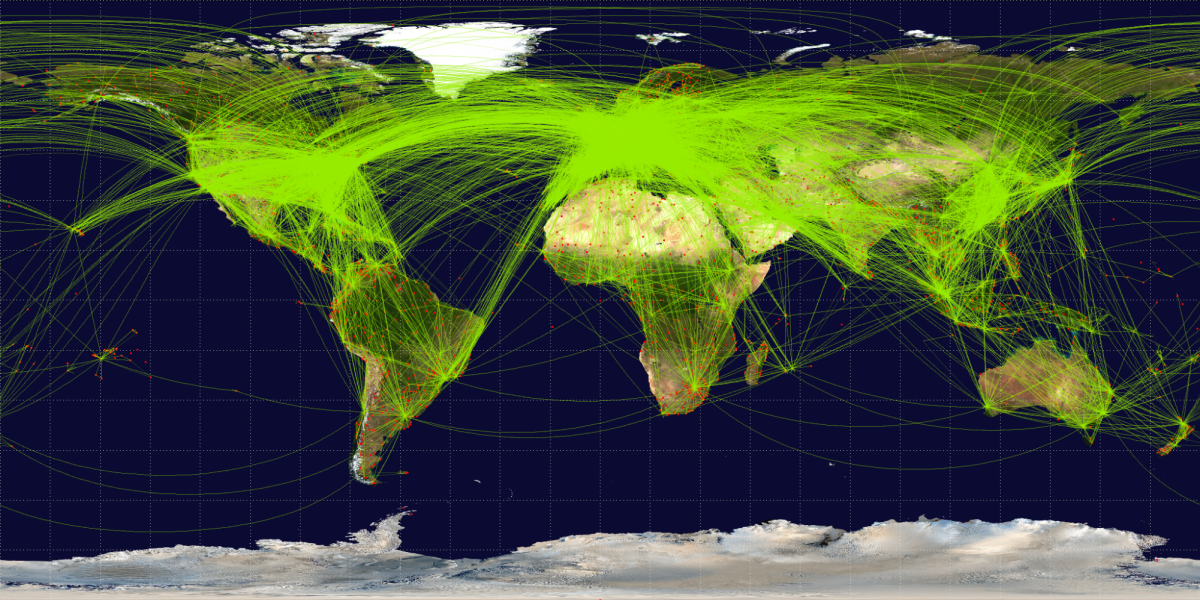
Credit: Wikimedia
More to Discover