


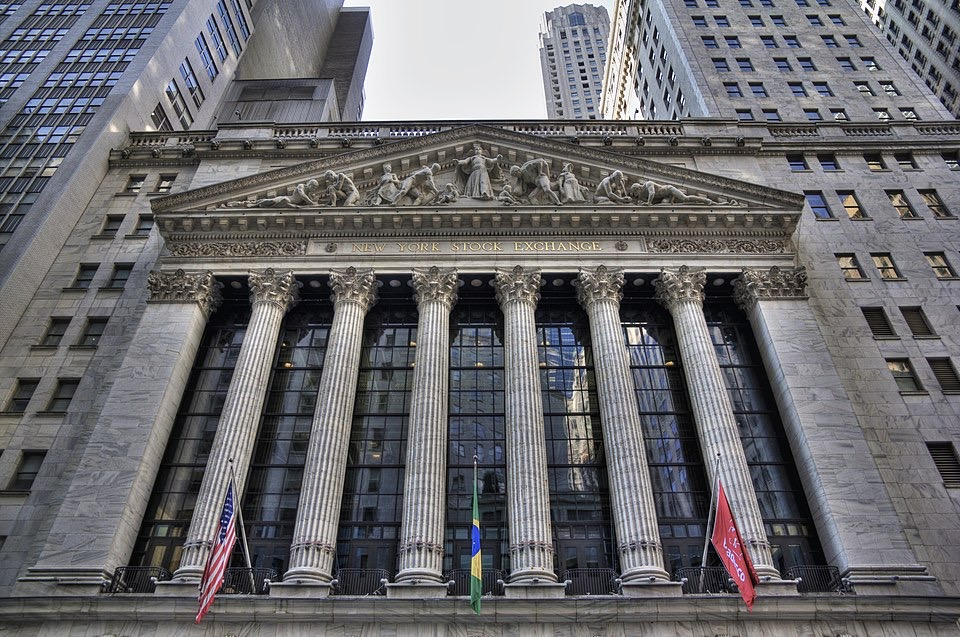
Global markets whipsawed late last month as Iran tensions drove oil prices sharply higher and stocks swung on shaky ceasefire hopes, a shock that is now reaching American drivers, as gas prices near or exceed $4 a gallon nationwide.
The conflict with Iran that began on Feb. 28 instilled fear into the markets and caused them to fluctuate in price. Several of the most valuable routes, like the Strait of Hormuz, are used to transport large amounts of energy around the world. Because the price of oil skyrocketed, the value of those routes skyrocketed as well, causing stocks to trade in an up-and-down manner as investors were constantly on the lookout for signals of a ceasefire. Stocks fell further as investors worried that higher inflation could make a peaceful resolution more difficult to achieve.
Iran has been locked in a series of confrontations with its neighboring countries in recent years, mainly over its nuclear program and its role in fighting alongside the Iraqi and Syrian government troops, as well as its attempts to assert control over critical waterways including the Strait of Hormuz, through which about one-fifth of the world’s oil supply is shipped. Instability in the strait has already led to an increase in oil prices and had repercussions around the world.
Fighting between Iran and the U.S. has put a growing strain on global energy markets as concerns grew about a prolonged conflict that could possibly threaten one of the world’s main oil shipping highways through the Strait of Hormuz. Early expectations were for a brief conflict, but now more than 11 weeks in, Iran appears to be fighting on and has threatened to restrict access to the strategic waterway. Those higher oil prices are now trickling down to gasoline and other petroleum products.
Major indicators have shown that the market is unstable. The S&P 500 dropped about 3.2% in the last week of March after fighting broke out again. At the same time, energy stocks like ExxonMobil and Chevron rose by about 6–9% as oil prices went above $95 per barrel, according to Bloomberg. During the same time, airline stocks fell by four to seven percent because fuel costs were going up. Major shipping companies also saw their stocks fall by 3-5%. At the same time, gold prices rose to almost $2,300 per ounce, according to Reuters. This was a sign that investors were moving toward safer assets as global markets became more uncertain.
Mukesh Dave, Chief Investment Officer at Aravali Asset Management, describes how investors are reacting to the uncertainty.
“[Investors] don’t want to make money at the moment … They don’t want to be in the market,” he said in an interview with Reuters in response to the volatility of the current market.
Stock markets worldwide have seen large swings in price as investors try to make sense of the ongoing conflict. Markets surged briefly on the hope that a brief de-escalation in hostilities was at hand, but that has not proven to be the case, with continued violence and no ceasefire in sight. Shares have plummeted every time hostilities appear to flare up anew, and positive developments have not been enough to begin reversing those sharp drops.
The market was extremely volatile over the course of March due to the increase in commodity prices. While an increase in oil prices can be good for the oil industry and help reverse some of the decline in other sectors, it will also push up inflation and potentially cause higher interest rates which could then weigh on growth. Concerns over energy supplies and continuing hostilities in the Middle East have also persisted.
Dr. Pamela Maddock, a teacher in the History and Global Studies department, said the market swings reflect a deeper issue.
“Markets rely on stability, and right now there’s very little of it,” she said. “Conflicts like this disrupt oil supply, drive up prices, and create ripple effects across the global economy. The uncertainty around the war’s goals and how long it will last only makes investors more cautious.”
She added that the long-term effects could extend beyond markets.
“If this continues, it could accelerate shifts toward alternative energy or electric vehicles,” she said. “But in the short term, it’s mostly about volatility and unpredictability.”
The political uncertainty surrounding the conflict has only added to market instability. Unclear objectives, shifting strategies, and mixed public opinion in the United States have made it difficult for investors to predict how the situation will unfold. If the war drags on or expands, economists warn it could have broader implications, including effects on elections, policy decisions, and global economic growth.
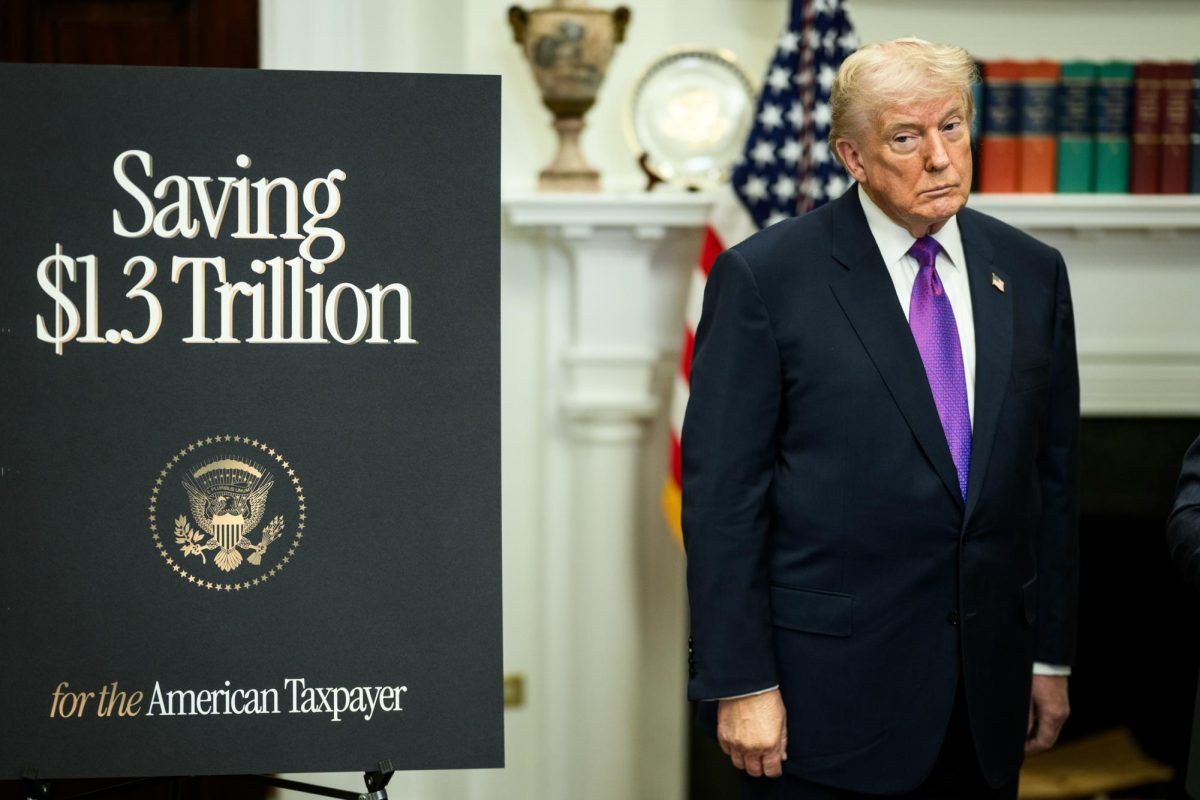
Under President Donald Trump, the U.S. government has taken a mix of military and economic steps to respond. Officials have said they are willing to protect shipping routes in the Strait of Hormuz and work with allies to keep the oil supply stable. The government has talked about the possibility of releasing oil from the Strategic Petroleum Reserve to ease price pressures, but it has also stressed the need to stop the situation from getting worse. At the same time, the market has been unstable because people don’t know what policies will be made in the future.
Sangwon Choi, a junior from Busan, South Korea, said the war highlights how interconnected the world has become.
“It’s not something that affects my day-to-day life directly, but it’s always in the background,” Sangwon said. “I hear about it in the news or from people around me, and it makes me realize how connected everything is.”
War in Iran Disrupts Global Markets
Credit: Wikipedia
More to Discover














About the Contributor
Richard Yu-Hwang ’26, Staff Writer/Editor
Richard Yu-Hwang is a junior from Manhattan, NY. He enjoys playing water polo and talking about football.