Over the course of the year, one major concern of international students has come from their student visas.
It’s been about a year since the Department of State announced an updated policy that changes the eligibility requirements for nonimmigrant visa applicants who may qualify for an in-person visa interview waiver. The new restriction reduced a number of eligible applicants, increasing the need for in-person appointments. However, due to the significant cut of the employees in the government agencies, there is a lack of workers in the embassy, making it extremely hard for students to get the documents they need.
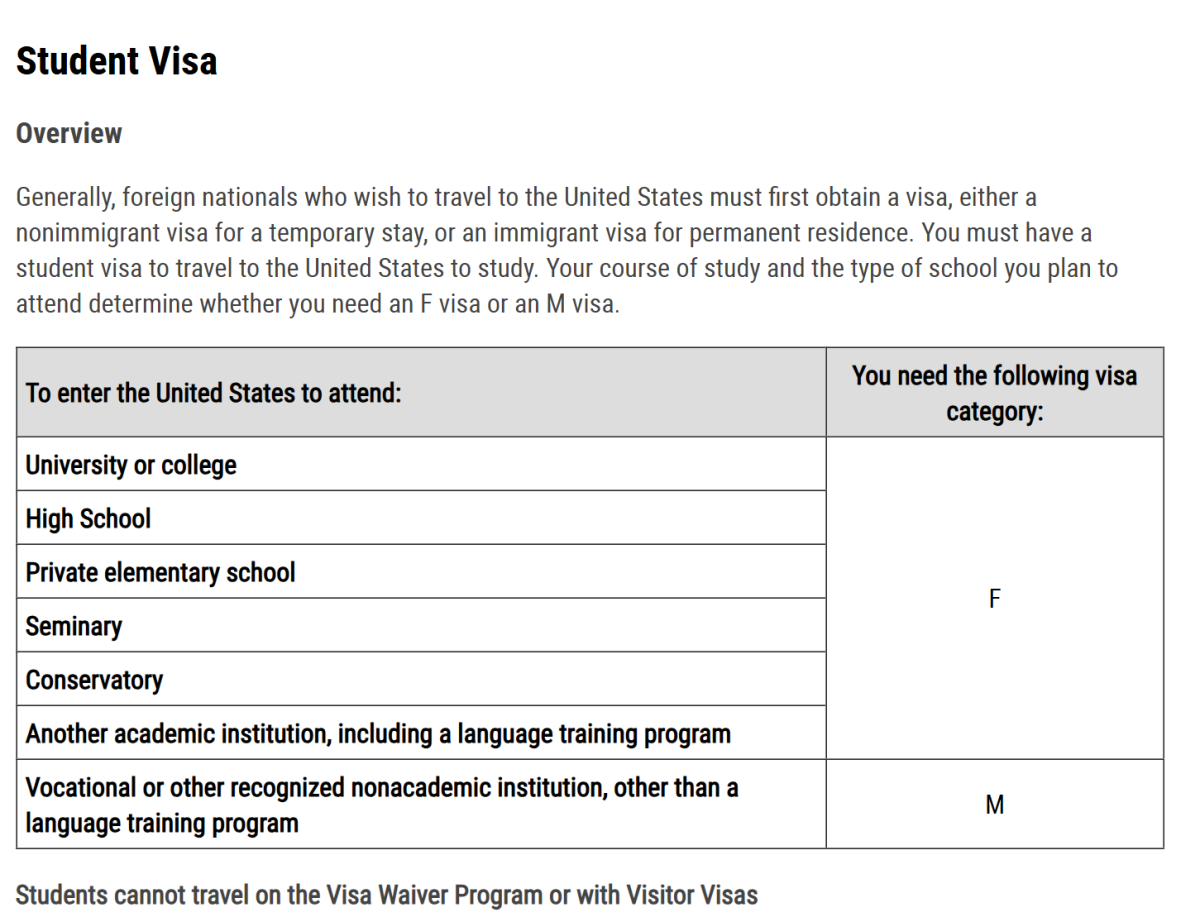
Visa is an official document that authorizes a foreign national to enter, leave, or stay in country for a specific purpose and duration. Specifically, international students are required to get an F1 Visa, which is a nonimmigrant visa for those wishing to study in the U.S., in order to stay and study at Williston.
Daye Kim, a freshman from Seoul, came to campus and joined classes a lot later than other students because she had to wait for her visa to get approved. She shared the stress she went through during her process.
“The visa process was honestly pretty nerve-wracking,” she said. “I remember being so anxious about the interview at the embassy having to explain my study plans in English and making sure every single document was perfect. The waiting period was the hardest part because I didn’t know if I’d get my visa in time for the start of the term. It felt like my whole future was hanging on a single piece of paper.”
Not only is the application process itself difficult but also joining the community later than other students. Daye also shared how she went through this hardship.
“Arriving late was a big challenge,” she said. She often felt overwhelmed by catching up with everything since day one. The challenge does not just stay in academic.
“Socially and emotionally, it was even tougher,” she explained. “Friend groups had already started to form, so I felt like an outsider trying to break in. It was lonely at first, and I felt a lot of pressure to hurry up and adapt while dealing with jet lag and homesickness all at once.”
Williston has been offering huge support for such international students in need. Specifically, they have been providing timely documentation, including updated I-20 forms and detailed guidance on visa requirements.
International Student Coordinator Nat Simpson experienced an increase in concern over this past summer trying to handle the situation.
“The Admission Office and my office were in regular contact during the past summer with the handful of students who had to renew their student visas to have an informed pulse on the process and to support families through the visa application process, ” he said. “Regular communication through emails, webinars, and information sessions helped students stay informed about changes and available support resources”.
Some other concerns come from the social media vetting during the application. In the process, applicants may be asked to list social media platforms and usernames used within the past five years. According to the Stanford University, multiple news outlets are reporting that Consular Officers may examine online content for language suggesting “hostile attitudes” toward the United States.
“I understand that for security purposes,” Ronnie Bedard, a teacher in the History and Global Studies Department, said.
Entry into a country is a privilege, not a right, and governments have broad authority to decide who they allow in, explained Bedard, who teaches Humanities Social Justice. Reviewing social media is treated as part of background checks. Immigration officials are legally allowed to use available information when making visa decisions.
This inaccessibility to visa is affecting not only Williston but also other educational institution across the U.S. According to The New Tork Times, the number of international students arriving in the U.S. in August 2025 fell by 19% compared with 2024—the largest decline on record outside of the pandemic.
About 25% of student body in Williston is international students and about 70 of them are from Asian countries. In 2025, the number of Asian students arriving in the U.S. in August fell by 24%—the lowest August numbers on record outside of the pandemic.
Bedard says that this entire shift in the government attitude towards the visa and immigration policy affected the way she teaches ninth grade.
“The truth about anything that is political, anything that has to do with human rights and social justice, is that the truth lies in the boring gray area,” she said. “I always try to help students by building empathy. And what that means is trying to understand where they are coming from. Trying to understand why they think the way they think.”