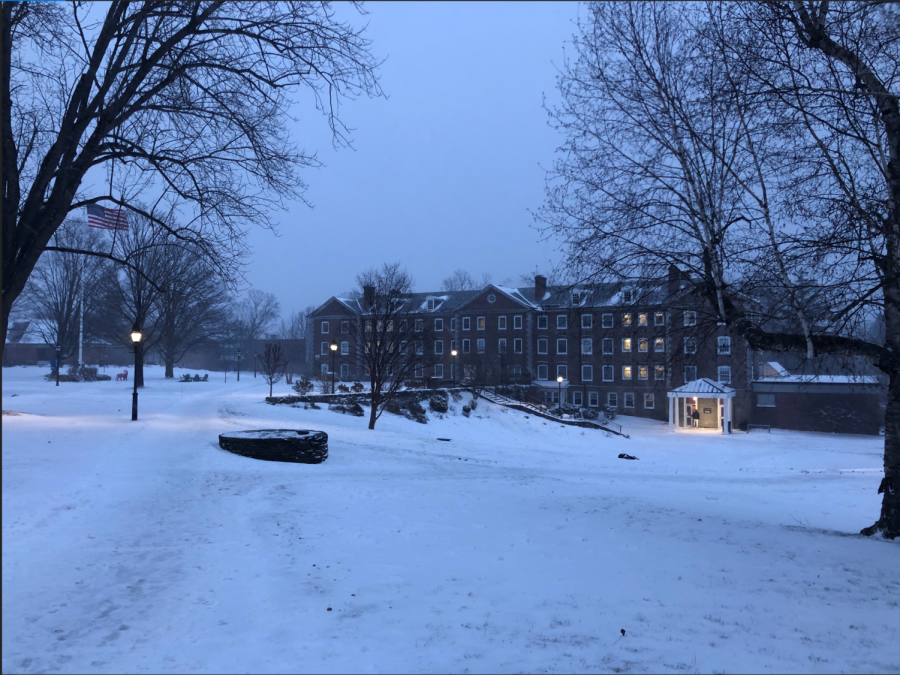
For many boarding students, the cost of living on campus extends beyond tuition and housing, especially when it’s as cold as it’s been.
Boarders tend to not be restricted from their parents on their ways of spending money. Whether it is for their clothes or gift to their friends, they often enjoy shopping online. One of the biggest expense goes to DoorDash, despite of the service from the dining hall.
Since 2024, Williston has allowed students to order food delivery through services other than local restaurants such as Dominos or Antonio’s through apps including DoorDash and Uber Eats. As much as it allowed students for more access on food options, it also opened up students for more ways to spend more money
Athletes, in particular, often rely on food delivery as a practical solution. With schedules filled with late practices, or games, some students find it difficult to make it to the dining hall during regular hours. As a result, delivery meals sometimes become their primary dinner option.
Casey Connor, a senior from Chatham, N.J. says he often order after his hockey practice.
“I just eat very small amount of food before practice because I don’t want to be too full going to practice,” Casey said. “And after the practice, I’m always hungry but the dining hall is closed.”
Other boarders turn to delivery services for different reasons. With colder weather in recent days, leaving dorms to walk across campus can feel less appealing, especially when they live far from the dining hall.
Fatima Gonzalez Meza Fernandez, a junior from Mexico City who lives in Hathaway, said the distance often discourages her from going to the dining hall.
“I spend the majority of my money on DoorDash for sure,” Fatima said. “The dining hall is just too far to go in this cold weather.”
She added that the policy allowing DoorDash has significantly increased her spending.
“I feel like if DoorDash was not allowed, I would probably go to the dining hall more because I am not up for pizza every night,” she said. “It’s also nice that we can just tell the dasher to come right in front of our dorm door. We don’t have to walk outside.”
Furthermore, during lunch periods or free blocks, some students choose to go to Tandem or Small Oven as an alternative to the dining hall. While these options can be refreshing and comforting, its purchases add to students’ weekly spending.
Personally, I often go to Tandem during free blocks when I don’t have enough time to walk back and forth between the dorm and schoolhouse, especially since I live in Hathaway.
However, some students argue that these extra expenses are unnecessary. Ozora Yazaki, a junior from Tokyo, said he rarely spends additional money on food.
“I’m not doing many sports, and dining hall food is usually enough for me,” Ozoro said. “Also, dining hall time is when I interact with most of my friends, and I prefer that to ordering food and eating alone in my room.”
Rising food costs nationwide may also be contributing to students’ increased spending habits. According to Economic Research Service, in 2026, prices for all food are predicted to increase 3 percent. As prices continue to rise, delivery fees and tips can quickly make ordering food significantly more expensive than eating in the dining hall. For boarding students, these costs can add up quickly. While food delivery offers flexibility, it also raises questions about affordability and how students balance convenience with cost.